
The auto locksmithing industry is filled with specialised terms and jargon that might sound like a foreign language to the average car owner.
Familiarising yourself with these terms can help you communicate more effectively with your auto locksmith and make informed decisions about your vehicle’s security. It can save you time, hassle and stress when dealing with car key and lock issues.
We’ve put together this handy glossary to demystify some of the most common auto locksmith words and phrases you might hear. We hope that by the end of this article, you’ll be better equipped to describe issues you’re facing and the solutions proposed by your auto locksmith.
Basic auto locksmith terminology
First things first, let’s start with the basics. These may be self-explanatory, but just in case you’ve never heard them before, it’s worth including them here:
Locked out
When you can’t get into your vehicle, usually because you’ve left your keys inside or lost them. Being ‘locked out’ is one of the most common reasons people call an auto locksmith. If you find yourself in this situation, it’s essential to stay calm and contact a professional rather than attempting to force entry, which could damage your vehicle.
Fit keys
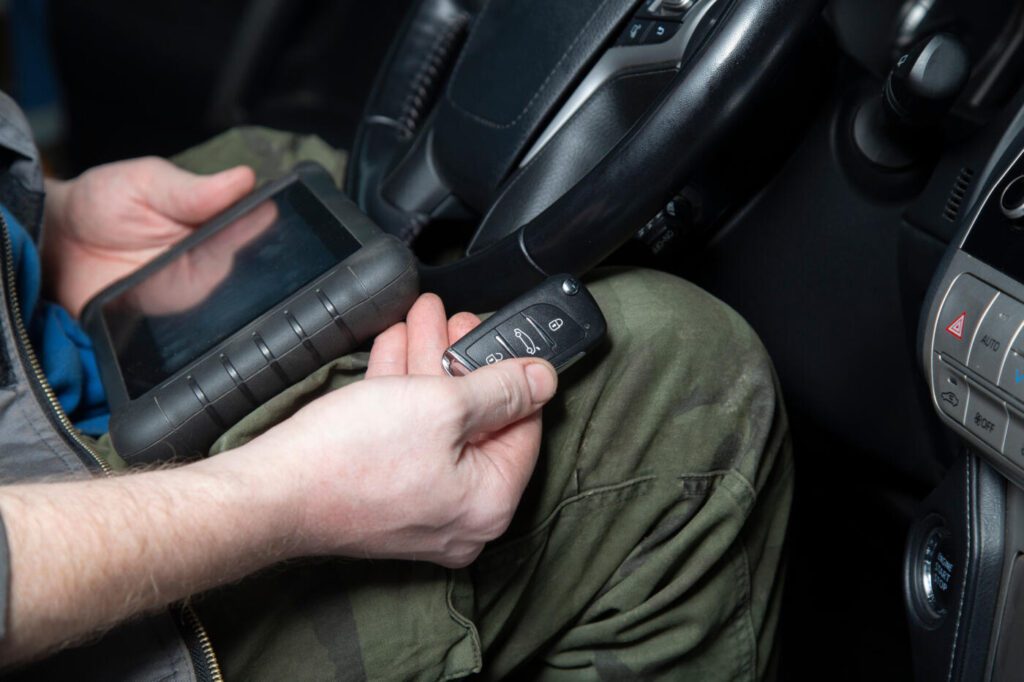
When an auto locksmith ‘fits keys’, they’re creating and programming a new key for your vehicle. This process involves cutting the key to match your car’s lock and, in modern vehicles, programming the key’s electronic components to communicate with your car’s immobiliser system. Fitting keys requires specialised equipment and expertise, especially for newer cars with advanced security features.
Rekey
Rekeying is the process of changing a lock so that it works with a new key, rendering the old key useless. It involves changing the lock’s internal mechanism rather than replacing the entire lock, which can be a cost-effective security measure. Rekeying might be necessary if you’ve lost your keys and want to ensure that anyone who finds them can’t access your car.

Key types and technology
Here are some of the words and phrases you might hear when talking about your car keys:
Transponder
The small electronic device embedded in the plastic head of your car key. It sends a unique signal to a receiver in the vehicle’s ignition system. If the correct signal isn’t received, the car won’t start, even if the physical key is correct. This technology has significantly reduced car theft since its introduction in the 1990s.
Remote fobs
The small devices attached to your key ring that allow you to lock and unlock your car remotely. They use radio frequencies to communicate with your vehicle. Many modern fobs also include features like boot release or panic alarms. If your fob stops working, it could be due to a dead battery or might require reprogramming.
High-security car keys
Car keys with advanced security features, often including complex transponder systems, rolling codes (which change each time the key is used) or even biometric data. These keys are designed to be extremely difficult to replicate, providing enhanced protection against theft.
Electronic key
An electronic key, also known as a ‘smart key’, allows for keyless entry and ignition in a vehicle. These keys contain a circuit board that communicates wirelessly with your car. When you’re near the car, it recognises the key and allows you to unlock the doors and start the engine with the push of a button.
Transponder key
This term is interchangeable with ‘chip key’. It refers to a key that contains a transponder chip. When you insert the key into the ignition, the car sends a signal to the chip. If the chip returns the correct code, the vehicle will start. This technology adds an extra layer of security beyond the physical cut of the key.
Immobiliser
An electronic security device fitted to motor vehicles to prevent theft. It’s designed to stop the engine from running unless the correct remote key or fob is present. When you insert the key or press the start button, the immobiliser checks for a unique code from the transponder in the key. If the code matches, the engine will start. If not, the fuel system or ignition is disabled, making it nearly impossible to hot-wire the vehicle. Immobilisers have significantly reduced car theft since becoming mandatory in the UK in 1998.
Ghost immobiliser
An advanced security device that adds an extra layer of protection to your vehicle. Unlike traditional immobilisers that are activated automatically, a ghost immobiliser requires you to enter a unique PIN code before the vehicle will start. This makes it extremely difficult for thieves to steal your car, even if they have your keys.

Locksmith tools and techniques
Here are some of the tools and techniques an auto locksmith might use to get you back on the road:
Autojiggler
A locksmith tool designed to manipulate the lock mechanism of a car door. It consists of a set of thin, flat pieces of metal with various notches and ridges. A skilled locksmith can often open a car door without damaging the lock by inserting these into the lock and applying gentle pressure. It’s important to note that these tools should be used only by professionals to avoid damaging your vehicle.
Bump key
A specially cut key that can be used to open pin tumbler locks. When inserted into a lock and struck with an object, the pins in the lock ‘bump’ up, allowing the lock to turn. While bump keys are a legitimate locksmith tool, they can also be used for illegal purposes, which is why their use and possession are strictly regulated.
Cut-to-code
The process of cutting a car key based on a specific code rather than copying an existing key. Each vehicle has a unique key code that determines the depths and spacing of the cuts on the key. Locksmiths can use this code to create a new key that will work in your vehicle’s locks. This method is beneficial if you’ve lost all copies of your key.
Flash programming
Updating or reprogramming the software in a vehicle’s electronic control units (ECUs). Flash programming might be necessary when replacing key fobs or updating security systems. It requires specialised equipment and software and should only be performed by trained professionals.
Lock mechanisms
Here are some of the different lock types and mechanisms you may come across:
Dimple lock
A dimple lock uses keys with small, round indentations (dimples) rather than the traditional jagged edge. The lock mechanism reads these dimples to determine if the key is correct. Dimple locks are considered more secure than conventional locks because they’re more difficult to pick. Some high-end vehicles use dimple locks for added security.
Tumblers
Tumblers are the small pins inside a lock that must be aligned correctly for the lock to open. When you insert the correct key, it pushes the tumblers into the proper position, allowing the lock to turn. Understanding how tumblers work can help you appreciate the complexity of lock mechanisms and the skill required to manipulate them safely.
How can Grays Locksmiths help?
Understanding these key terms – pun intentional – can significantly enhance your ability to communicate with your auto locksmith and make informed decisions about your vehicle’s security. While this glossary provides a foundation of knowledge, auto locksmithing is a complex field that requires extensive training and specialised equipment.
So, even if you think you know what you’re doing, it’s always worth consulting with a professional like our team here at Grays Locksmiths for any issues related to your vehicle’s locks or keys. We have the expertise to handle complex modern vehicle security systems to help you get back on the road as quickly as possible. Give us a call today if you’re stuck and need help.