
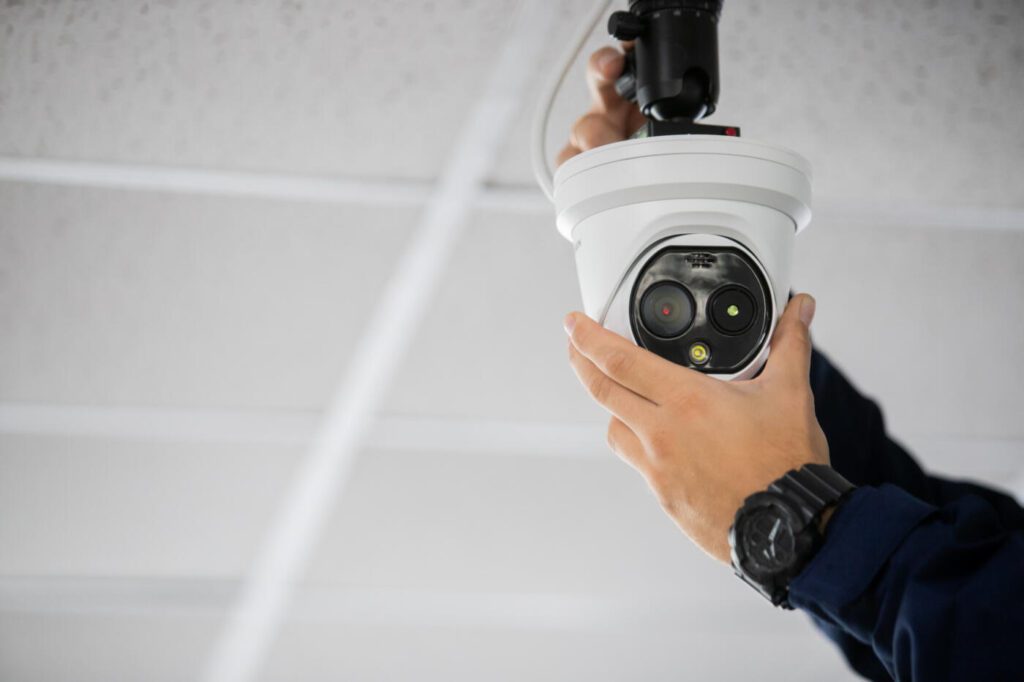
With the swift pace of today’s business environment, safeguarding your commercial premises is more crucial than ever.
The rise of cutting-edge surveillance technology plays a pivotal role in safeguarding businesses from potential threats.
There’s such a wide range of security camera options, but there are two choices that stand out – CCTV (Closed-Circuit Television) and IP (Internet Protocol) security cameras.
In this blog, we’ll look at the differences between these two systems and how each one can work to protect your business.
CCTV for businesses
CCTV has been a go-to security solution for decades. Picture those classic, boxy cameras perched on walls and ceilings. They’re hardwired to a central recording system and display live footage on a limited number of monitors within a closed circuit.
These cameras are seasoned veterans in the security game, and they do a pretty good job.
Here’s a breakdown of their purpose and benefits:
- Security & theft deterrence: One of the primary reasons businesses install CCTV cameras is to deter theft, break-ins, and other criminal activities. Visible CCTV cameras can discourage potential thieves.
- Evidence gathering: In the event of a crime, recorded footage from CCTV cameras can provide valuable evidence enabling law enforcement agencies to identify and prosecute offenders.
- Employee safety: CCTV cameras can help ensure employee safety, particularly in high-risk areas or during late hours.
- Monitor employee productivity: Some businesses use cameras to monitor employee behaviour and productivity, ensuring tasks are being carried out efficiently and company policies are being followed.
- Liability protection: Footage from cameras can help resolve disputes, be it amongst employees or with customers. For instance, in case of slip-and-fall claims, the video footage can provide clarity on the incident.
- Traffic & crowd management: In retail environments or event spaces, CCTV cameras can help monitor the flow of people, ensuring that areas don’t get overly congested and that safety protocols are followed.
- Operational efficiency: In manufacturing or production facilities, CCTV can be used to monitor machinery and processes, helping to identify operational inefficiencies or malfunctions quickly.
- Remote monitoring: Modern CCTV systems often allow for remote monitoring, enabling business owners or security personnel to watch live or recorded footage from anywhere using a computer or mobile device.
- Decrease in business insurance premium: Having a CCTV system might qualify your business for a reduction in insurance premiums, as it reduces the risk of theft and damage.
- Peace of mind: Knowing that your business premises are being monitored 24/7 provides peace of mind.
It’s worth noting that while CCTV offers many advantages, you should also be aware of legal and ethical considerations. There might be restrictions or guidelines about where cameras can be placed, how footage is stored, and how long it’s retained. Additionally, it’s typically good practice (and often legally required) to inform both employees and the public of surveillance through clear signage.
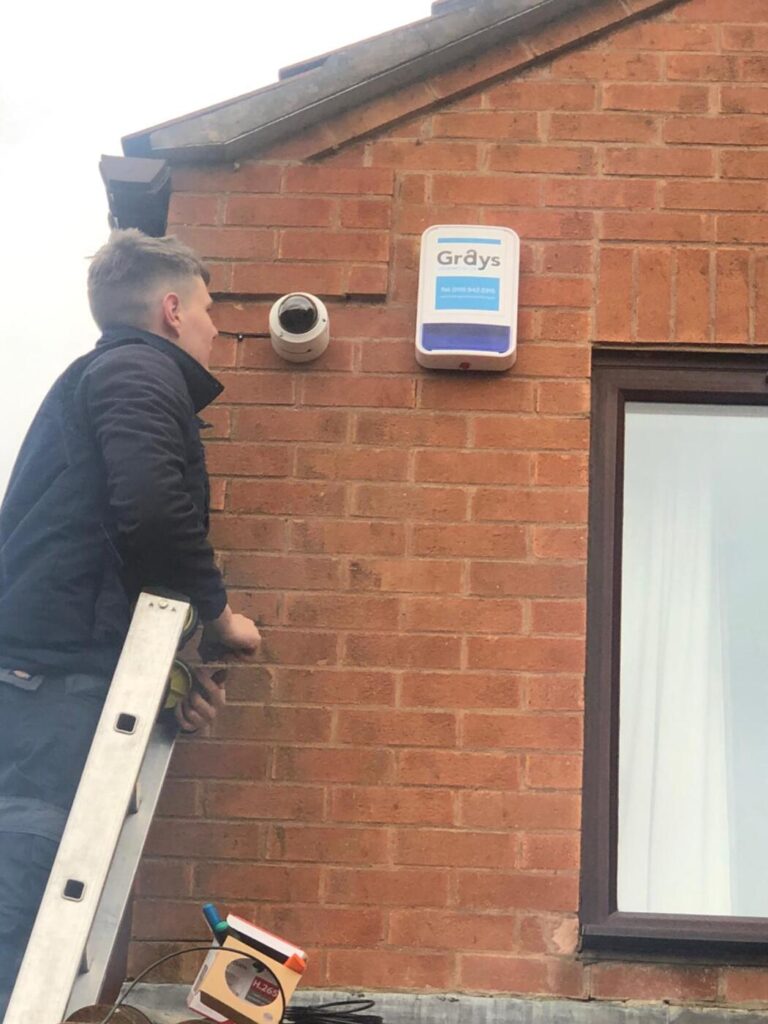
IP security cameras for businesses
IP security cameras are the young prodigies of the surveillance world. IP stands for Internet Protocol, which means these cameras are digitally connected to your network. They’re like little tech wizards that transmit and store video data as digital files.
IP security cameras represent a step forward from traditional analogue CCTV. Instead of transmitting video over a coaxial cable to a single centralised recording device, IP cameras send and receive data via the internet. They’re widely used in modern business environments due to their advanced features and capabilities. Here’s a breakdown of what IP security cameras are and their benefits for businesses:
- High-resolution video: IP cameras generally offer higher-resolution video than traditional analogue systems. This means clearer images, which can be critical when trying to identify faces or other details.
- Scalability: Unlike traditional CCTV systems, which often require additional hardware to add more cameras, IP systems can typically be expanded with just a new camera and sufficient bandwidth on the network.
- Remote access: IP cameras can be accessed and controlled remotely from anywhere with an internet connection. Business owners or security personnel can view live feeds or access recorded footage from devices like computers, tablets or smartphones.
- Distributed intelligence: Many IP cameras come equipped with onboard processing power, allowing them to run video analytics or other software directly on the camera. This can be used for motion detection, facial recognition and other advanced features.
- Power over ethernet (PoE): IP cameras can often be powered through the same ethernet cable that connects them to the network, reducing the need for separate power sources or cables.
- Flexibility: IP cameras can be easily integrated into existing IT infrastructures. Plus, they’re not bound to specific distances from the recording device, as traditional cameras might be.
- Enhanced storage options: IP camera systems can store footage on local network devices, cloud-based storage solutions or both, offering greater redundancy and ease of access.
- Cost-effective: While the initial investment might be higher than traditional systems, the scalability, reduced cabling and other benefits can lead to cost savings in the long run.
- Advanced features: IP cameras can come with a variety of advanced features, such as wide dynamic range, infrared for night vision and two-way audio capabilities. It’s like having your own mini-security team.
When considering IP cameras for your business, it’s essential to understand your network’s bandwidth requirements, as high-resolution cameras can require significant bandwidth. Furthermore, you should ensure you follow legal and ethical guidelines regarding surveillance, including notifying employees and customers that they’re being recorded and safeguarding the privacy of recorded data.
Which security cameras are best for business?
It all comes down to your business’s needs and your budget. If you want an affordable, straightforward setup with reliable performance, CCTV cameras will have your back. But if you crave high-quality images, remote access and advanced features, IP cameras are the way to go.
Many businesses opt for a hybrid system, combining both CCTV and IP cameras to balance their security requirements. You can use IP cameras for critical areas and CCTV cameras for less sensitive spots.
No matter which option you choose, investing in a robust security camera system will give you peace of mind and protect your business from unwanted surprises. Remember, security is the name of the game and with technology evolving rapidly, it’s always smart to stay updated.
Grays Locksmith business security services
At Grays Locksmiths, we can design and implement a bespoke security camera system to suit all budgets and all requirements. Depending on your needs, you can choose from our range of bespoke CCTV packages.
Our complete security solutions help you protect what’s important. Get in touch now for more information.