
You’ve just picked up the keys to your new home. The removal van’s been and gone. Boxes are stacked everywhere. You’re finally in.
Exciting times.
But as you settle in that first night, a thought crosses your mind: who else has keys to this place?
It’s a question that nags at many new homeowners in Nottingham. At Grays Locksmiths, we regularly help people who’ve just moved in and want to take control of their home security. Some come to us after finding evidence that someone’s been in their property. Others can’t shake the feeling that they’re not the only ones with access.
Rekeying your locks after moving home is one of those security measures you might not have considered until now, but it’s worth thinking about.
This blog will help you understand what rekeying involves, when you should do it, and how to decide if it’s the right choice for your situation. Your new home should feel secure from day one, and knowing who can access it is a good place to start.
What does rekeying your locks mean?
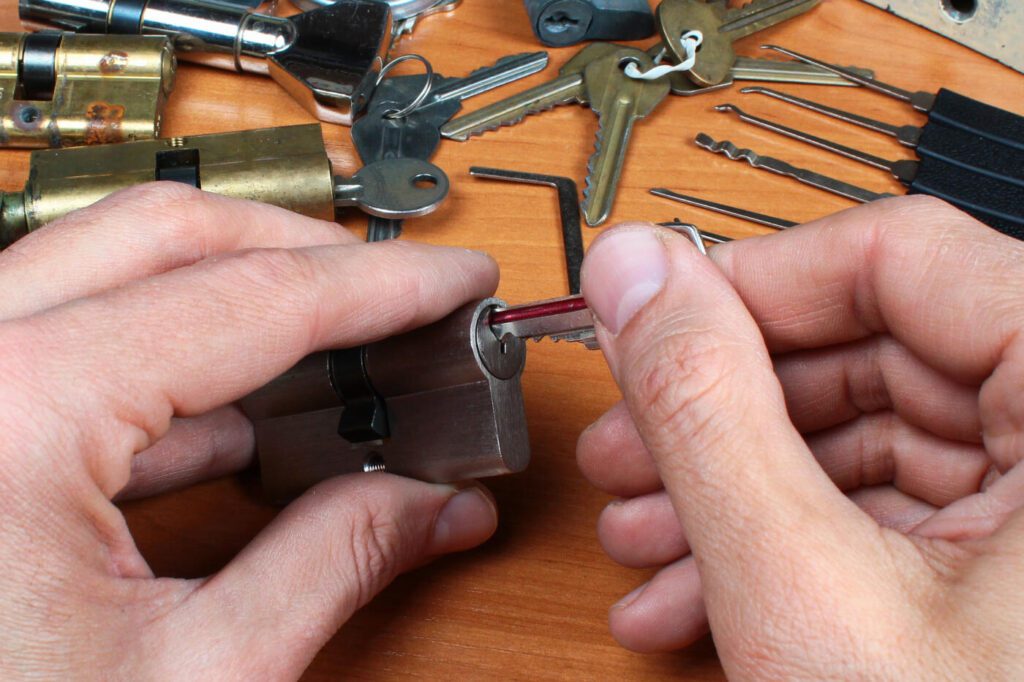
Rekeying sounds technical, but it’s pretty straightforward. Your locksmith changes the internal pins and springs inside your existing lock cylinder so that your old keys won’t work anymore. The lock hardware stays exactly where it is. You get new keys that fit the reconfigured lock, and any previous keys become useless.
This is different from replacing your entire lock. With rekeying, we’re working with what you’ve got rather than installing completely new hardware. Think of it like changing the combination on a safe rather than buying a new safe altogether.
The process is surprisingly simple once you understand the mechanics. Each lock has a series of pins that need to line up at the right height for the lock to turn. When we rekey, we swap those pins for different sizes that match your new key instead of the old one. It takes skill and precision, but it’s not the major job many people imagine.
Rekeying brings several practical benefits. It’s typically cheaper than complete lock replacement, often by quite a margin. We can usually complete the work faster, too, getting multiple locks rekeyed in a single visit. Your doors keep their existing appearance, which matters if you’ve got period features or recently upgraded hardware. And if you’re working with good-quality locks that meet current security standards, there’s no reason to replace them just because you’ve moved in.
That said, rekeying isn’t always the answer. If your locks are damaged, visibly worn, or don’t meet British Standard requirements, replacing them makes more sense.
Insurance companies often require BS3621 locks, and if your new home doesn’t have them, you’ll need to upgrade rather than rekey. We can assess your existing locks and help you decide which approach suits your situation and budget.
Who might have keys to your new home?
This is where things get interesting. You know the previous owners had keys. That’s obvious. But have you thought about everyone else who might have cut copies over the years?
Start with the previous owners’ family. Perhaps they had adult children who moved out but kept a key to visit. Maybe elderly parents had a spare for emergencies. These are people who had legitimate reasons to access the property. But you don’t know them, and they don’t know you’ve moved in.
Then there are the professionals. Estate agents hold keys during viewings and sometimes keep them on file. Tradespeople who’ve worked on the property might never have returned theirs after finishing a job. Cleaners, gardeners, dog walkers or house sitters might all have had access at some point. You’re buying the property, not a detailed history of everyone who’s ever held a key to it.
Even if the previous owners seem trustworthy and assure you that they’ve collected every key, they can’t be certain. Keys get cut at local shops, given to neighbours for emergencies, hidden under plant pots and forgotten about. Someone might have made an extra copy years ago and completely forgotten. The previous owners aren’t trying to deceive you. They don’t know with certainty where every key ended up over potentially decades of ownership.
This isn’t about being paranoid or distrusting. It’s about taking control of your home security from day one.
You wouldn’t accept a car if you knew spare keys were floating around that you couldn’t account for. Your home deserves the same consideration, especially when the solution is straightforward and affordable.
When you should rekey
Some situations don’t need much thought. If you’re facing any of these circumstances, rekeying isn’t something to consider. It’s something you need to do:
- You’ve got no idea how many keys were cut during the property’s lifetime. Most homes we work on have been owned by multiple families over the years, and each one could have made several copies. The uncertainty alone should prompt action.
- The previous owners can’t account for all their keys. They’ve handed over two or three, but they’re not sure if that’s everything. Maybe there were more. Maybe there weren’t. You shouldn’t have to guess about something this important.
- You’re buying a rental property that’s had multiple tenants. Students, young professionals, families – all coming and going, all getting keys, some probably never returning them when they moved out. Rental properties are particularly risky because key control is notoriously poor.
- You’ve bought a repossession where keys weren’t properly collected. The circumstances that lead to repossession often mean that keys don’t get handed back through normal channels. You might have the keys the mortgage company received, but that’s not the same as having all the keys that exist.
- There are signs that locks have been tampered with or forced. Scratches around the keyhole, damage to the lock mechanism, or evidence of previous break-in attempts all suggest your locks have seen trouble. Rekeying gives you a fresh start with mechanisms you know are sound.
- The property sat vacant for extended periods, or estate agents used key safes that multiple people accessed. Key safes are convenient for viewings, but they also mean that numerous agents, contractors and potential buyers knew the code and could have accessed your property.
- You’ve inherited property or received it through family transfers, where keys might have been distributed widely among relatives. Family property often has the most confusing key situation of all, with copies made for various family members over the years and no clear record of who has what.
In any of these situations, the cost of rekeying is trivial compared to the risk of unwanted access to your home. It’s not an expense. It’s an investment in your peace of mind and security.
When you might skip rekeying
To be balanced, there are a few situations where rekeying might not be necessary.
Buying from family members you trust completely is probably the most common exception. If you’re buying your parents’ house or taking over a sibling’s property, and you know exactly who has keys and can collect them all, the urgency isn’t quite the same.
New-build properties where you’re the first occupant present less risk. The builders and sales team had access during construction, but reputable developers manage keys carefully and provide you with all copies. That said, construction workers and subcontractors do move around sites, so even new builds aren’t entirely risk-free.
If you’re replacing all your doors or upgrading to smart locks in the next few weeks, rekeying existing locks you’re about to remove doesn’t make much sense.
However, even in these relatively low-risk scenarios, rekeying gives you absolute certainty. It removes any lingering doubt about who can access your property. It isn’t easy to put a price on knowing with complete confidence that only the people you’ve chosen have keys to your home.
If you’re working with a tight budget after your house purchase, you could prioritise which doors to rekey.
How rekeying compares to other options
Rekeying isn’t your only choice when securing a new home. Understanding all your options will help you make the best decision for your situation.
Complete lock replacement costs more but brings other benefits. You get new hardware with no wear or hidden damage. You can upgrade to higher security standards if your current locks are outdated. And you can modernise the look of your doors at the same time. Replacement makes particular sense if your existing locks are old, damaged or don’t meet BS3621 standards that insurance companies require.
Adding supplementary locks gives you extra security without touching your existing locks. You might add a mortice deadlock to a door that only has a cylinder lock, or fit additional bolts to vulnerable doors. This layered approach can work well, though it doesn’t solve the problem of who has keys to your existing locks.
Doing nothing is an option, though not one we’d recommend. Some new homeowners decide they’re comfortable with the risk or don’t get around to addressing it. But given how affordable rekeying is compared to the value of your property and belongings, it’s a gamble that doesn’t make much financial sense.
How can Grays Locksmiths help?
So, do you need to rekey your locks after moving home?
The honest answer is that it depends on your situation and how much uncertainty you’re comfortable with. But for most homeowners, rekeying offers substantial peace of mind for a relatively modest investment.
At Grays Locksmiths, we’ve helped hundreds of Nottingham homeowners make these decisions over our years serving the local community. We understand that every property and situation is different. Sometimes rekeying is the obvious answer. Sometimes lock replacement makes more sense. Sometimes a combination of approaches works best. We can assess your individual situation, explain your options clearly, and recommend the approach that gives you proper security without unnecessary expense.
Ready to take control of your new home’s security? Call us on 0115 942 2315 to discuss your specific needs. We’ll give you honest advice about whether rekeying is right for your situation, how much it’ll cost, and when we can get the work done. Your new home should feel secure from day one, and we’re here to make sure it does.