
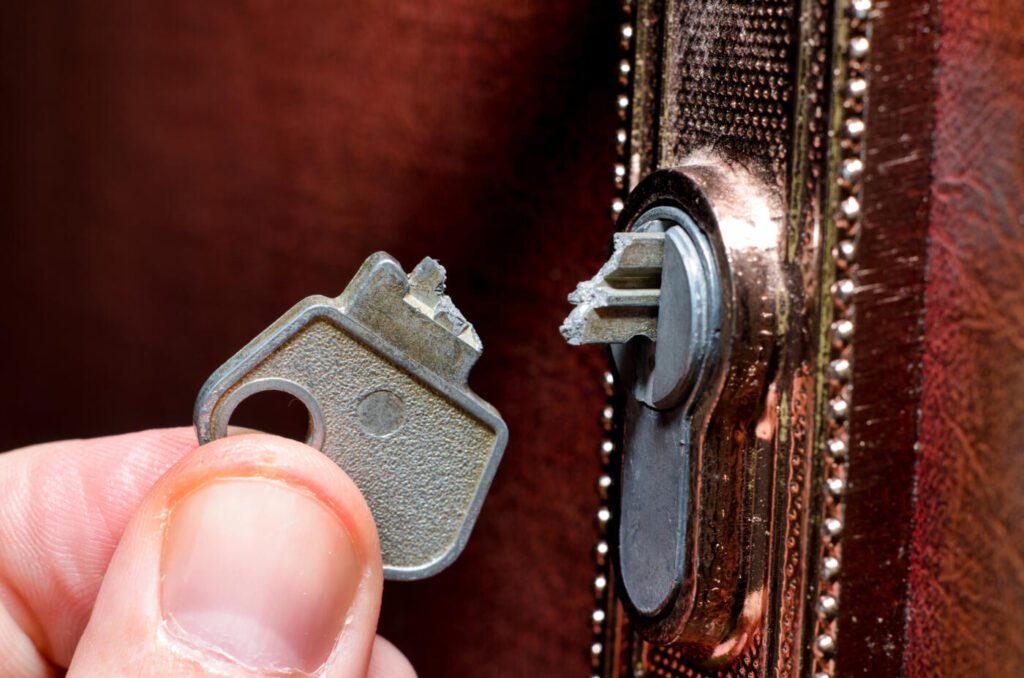
Getting a key stuck in a lock is something many people will face at some point.
It can happen to any lock, at any time, and often at the most inconvenient moments.
Keys become stuck for various reasons, from worn lock mechanisms to damaged keys. Knowing how to handle the situation can mean the difference between a minor inconvenience and a costly emergency.
While it might be tempting to try and force the key free, it can lead to broken keys, damaged locks and expensive repairs. Understanding when to attempt removal yourself and when to call a professional locksmith can save you time, money and frustration, and that’s what this blog’s about.
Common reasons for stuck keys
Keys become stuck for several reasons. Dirt and debris are the most common culprits.
Every time you insert your key, it can carry microscopic particles into the lock. Over time, these particles combine with lubricant and atmospheric dust to create a sticky residue that interferes with the lock’s mechanism. This build-up can prevent the key from properly engaging with the lock’s pins, leading to sticking.
Weather can also play a significant role. External locks are particularly vulnerable to rain, which can cause rust to form inside the lock cylinder. In winter, moisture in locks can freeze, gripping the key firmly in place. Salty air in coastal areas can accelerate corrosion, while pollution in urban areas can create acidic residues that damage lock mechanisms over time.
Natural wear and tear creates another set of problems. Keys wear down with use, particularly around the peaks and valleys that engage with the lock’s pins. As these areas become smoother, they may slip past the pins instead of lifting them correctly, causing the key to jam. The lock’s pins and springs can also wear out, leading to misalignment and key sticking.
Physical damage to either the key or lock often results in sticking. Bent keys, usually caused by using too much force or using the key as a lever, might enter the lock but become trapped inside. Damaged lock mechanisms, whether from attempted break-ins, harsh weather or general wear, can trap even perfectly good keys.
Signs of a damaged lock include stiffness when turning the key, unusual noises or visible damage around the keyway. If you spot any of these, it’s best to get your lock checked out by a professional rather than risk a stuck key.
What to do first
Before attempting to remove a stuck key, assess the situation carefully.
Is the key stuck while locking or unlocking?
Can you see any obvious damage to the key or lock?
Your safety and security, and the integrity of your lock should be your primary concerns.
If the key is stuck in a front door lock and you have no other way to secure your property, this becomes a security issue requiring immediate professional attention.
The biggest risk in attempting to remove a stuck key yourself is breaking the key inside the lock. Modern locks contain intricate pin mechanisms that can trap broken key fragments, making extraction complex and expensive. If your key is visibly bent, shows signs of wear or feels particularly fragile, don’t attempt to remove it yourself. The risk of breaking it is too high.
Pliers, screwdrivers and makeshift key grips can damage your key and lock. They can scratch the lock’s barrel, damage the pins or compress the key with enough force to snap it. Even seemingly helpful tools like tweezers can cause damage if used incorrectly. The cost of repairing such damage often exceeds the price of calling a locksmith in the first place.
So, if you decide to try removing the key yourself, work in good lighting, maintain a clear head and don’t get frustrated or try to rush things, as you could end up causing more damage.
If you’re stuck outside in bad weather or it’s getting dark, consider calling a professional rather than risking damage to your lock. Remember, a damaged lock isn’t just an inconvenience; it’s a security risk that could invalidate your home insurance.
Basic steps to remove a stuck key
If your key becomes stuck, first try lubricating it. Proper lock lubricant is best, but graphite powder can work in a pinch. Never use oil-based products like WD-40 as your first option. While they might free the key, they can attract dirt and cause future problems.
Gently wiggle the key back and forth while pulling slightly. If the key moves at all, continue these gentle movements. Don’t pull or twist hard.
If the lock is frozen, try heating your key with a lighter before insertion, or use a de-icer if you have one available.
Keys often show signs before they break. If your key feels flexible or looks worn, replace it before it breaks. A key that’s about to break might feel stiffer than usual when turning, or you might notice small cracks in the metal.
If your key does break in the lock, don’t try to remove it yourself. Attempting to extract a broken key can push the fragment further into the lock, making professional removal more difficult and expensive. Take a photo of how far the key has broken off. This information can help your locksmith.
How to prevent a stuck key
Regular maintenance is crucial for preventing stuck keys.
So, create a schedule for lock maintenance based on its use and environment. External locks exposed to weather need checking every three months, while internal locks might only need annual attention. A professional locksmith like Grays can clean the mechanism, check for wear and lubricate all moving parts using the appropriate products for your specific type of lock. Graphite powder or Teflon-based lubricants are best for most locks, as they don’t attract dirt like oil-based products.
Apply lubricant sparingly. Too much can combine with dust to create a sticky residue. In coastal areas or places with high pollution, consider using marine-grade lubricants that offer better protection against corrosion.
Key care is equally important. Store your keys separately to prevent them from scratching against each other. Don’t expose them to extreme temperatures or leave them in direct sunlight, as this can weaken the metal.
Avoid using keys for anything other than their intended purpose. They’re not box cutters, bottle openers or screwdrivers.
Have spare keys cut before you need them, and always use a reputable locksmith (we’re here) for key cutting. If a key feels loose in the lock, requires jiggling to work or shows visible wear, get a replacement cut immediately. Similarly, if your lock feels stiff, makes grinding noises or requires extra force to operate, book a locksmith.
These symptoms rarely improve on their own and often indicate developing problems that could, over time, lead to the key sticking or breaking.
Why use a locksmith?
Extracting a broken or stuck key requires skill and patience. And most modern locks contain security features that can complicate key extraction.
Professional locksmiths, like our team here at Grays, use a range of specialised tools to remove stuck keys safely. First, we’ll examine the lock to understand why the key is stuck and determine the best way to remove it. We might use lubricant to free a key stuck due to dirt or rust, or specialist tools to grip and remove a key that’s bent or broken. Throughout the process, we’ll take care to protect both the lock and any usable portion of the key.
Our team also stays updated on the latest lock designs and extraction methods through continuous training and professional development. We can handle everything from simple Yale locks to complex multi-point locking systems.
Beyond extraction, we can identify underlying issues that caused the key to stick. We’ll check for worn pins, damaged springs or alignment problems that might cause future issues.
Once your stuck key is removed, have your locksmith inspect the lock for damage. They can tell you if the lock needs repairing or replacing. Consider having a new key cut, even if the old one looks undamaged. Stuck keys often suffer invisible strain that can lead to future breaks.
How can Grays Locksmiths Nottingham help?
A stuck key doesn’t have to become a major crisis. Understanding the causes and knowing the proper steps to take can often help you resolve the situation without damage to your key or lock.
But if you’re unsure or worried you might cause further damage, it’s best to let the experts sort it, and that’s where Grays comes in. We offer emergency locksmith, lock fitting and key-cutting services to help you get unstuck and keep your keys and locks functioning as they should. Our certified master locksmiths provide expert guidance, high-quality products and professional installation.
Get in touch today to learn more or to book an emergency call-out.