
You’re enjoying a quiet Sunday morning when your neighbour knocks on your door. They’ve just returned from a week away to find their back door forced open, their valuables gone and their sense of security shattered.
As they’re telling you what happened, a troubling thought crosses your mind.
Could the same thing happen to you?
At Grays Locksmiths, we’ve helped hundreds of Nottingham homeowners upgrade their security after break-ins, and we’ve noticed the same vulnerabilities appearing time and again.
Your front door might look secure, but many locks that appear robust offer surprisingly little protection against determined burglars who know what to look for. The good news is that most of these lock weaknesses are straightforward to fix. You don’t need to turn your home into a fortress or spend thousands on a complete security overhaul. Often, targeted improvements to your existing locks can dramatically reduce your risk of becoming a victim. Here are the most common lock vulnerabilities we encounter and what you can do to protect your home.
Euro cylinder lock snapping
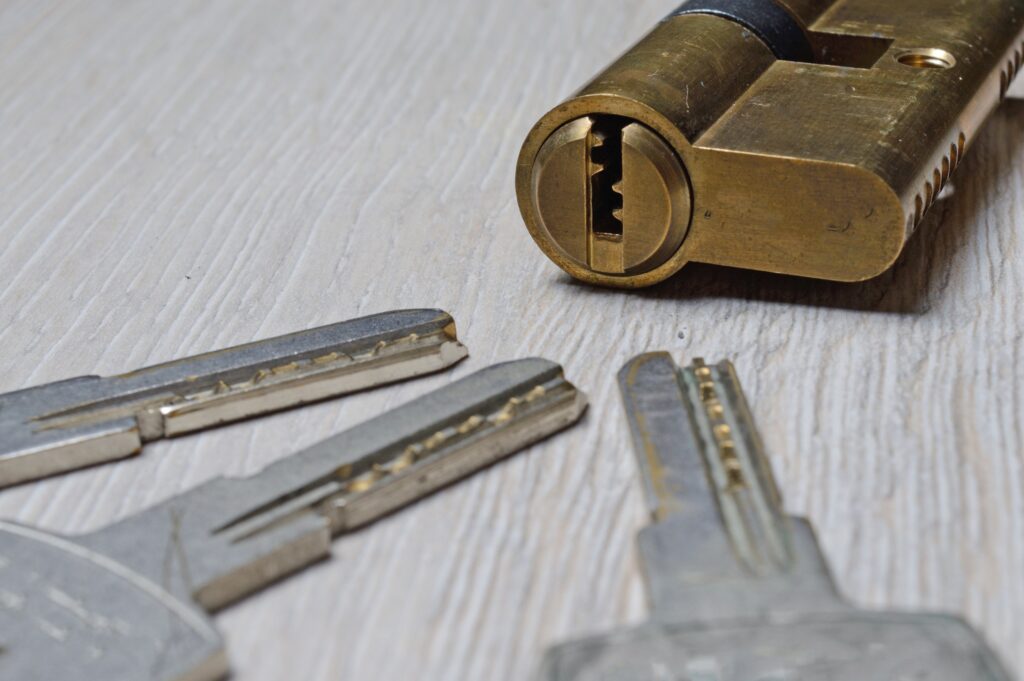
If you have a uPVC door, there’s a good chance your lock could be defeated in under 20 seconds using a technique called lock snapping. This method is popular with burglars because it requires minimal skill and basic tools that won’t attract attention.
Lock snapping works by applying pressure to the protruding part of the euro cylinder until it breaks, exposing the locking mechanism inside. Standard euro cylinders are designed to snap at their weakest point. But this safety feature becomes a security flaw when the break exposes the internal components. Once the cylinder snaps, burglars can manipulate the lock mechanism directly, often without making much noise.
The technique is particularly effective on older uPVC doors where the cylinder protrudes beyond the door handle. Many homeowners are shocked to learn that their seemingly secure door can be compromised so quickly. We’ve seen cases where expensive multi-point locking systems have been rendered useless because the euro cylinder was the weak link in the chain.
Upgrading to anti-snap cylinders solves this problem. Modern high-security options like ASSA Abloy cylinder locks are specifically designed to resist this attack method. Their cylinders either break in a way that doesn’t expose the mechanism, or they’re built with reinforced sections that prevent snapping altogether. They conform to British Standard Kitemark TS007, which means they’ve been rigorously tested against common attack methods. The upgrade typically costs a fraction of what you’d lose in a burglary, and many insurance companies offer premium discounts for homes with approved security measures.
Outdated mortice locks
Walk down any street in Nottingham’s older residential areas, and you’ll still find homes with mortice locks that predate modern security standards. These older three-lever locks might look substantial, but they offer significantly less protection than contemporary five-lever systems that burglars struggle to defeat.
The problem with older mortice locks lies in their internal construction. Three-lever mechanisms have fewer internal components, making them much easier to pick or force open. Experienced burglars can often identify these older locks just from their external appearance. The keyhole shape and lock face design give them away. Once they know they’re dealing with a three-lever lock, they know they have an easy target.
Beyond the security implications, outdated locks can create problems with your home insurance. Most policies now require locks to meet current British Standards, and three-lever mortice locks typically don’t qualify. If you’re burgled and your locks don’t meet the required standards, your insurance company might refuse to pay out, leaving you to cover the losses yourself.
Upgrading to a five-lever British Standard mortice lock can transform your door security. These locks have more complex internal mechanisms that are harder to defeat. The additional levers mean there are more possible key combinations, making lock picking extremely difficult. They also feature anti-drill pins and reinforced components that resist physical attacks. When professionally fitted, these locks provide the level of security that insurance companies require and burglars prefer to avoid.
Single locking mechanisms and night latch-only doors
If your door relies solely on a night latch or Yale-type lock, you’re essentially leaving your home secured with what burglars consider a minor inconvenience rather than a serious barrier. These locks, while convenient for daily use, can often be defeated using simple techniques that require no specialised tools or skills. These locks can often be bypassed by manipulating the mechanism through the letterbox or by applying pressure to the door while working the lock.
The fundamental problem is that night latch locks typically only secure the door at one point. Unlike multi-point systems that engage locks at several positions along the door frame, a single lock creates a concentrated stress point that can be exploited. When burglars apply force to a door with only one locking point, all the pressure focuses on that single mechanism and its surrounding frame area.
Pairing your night latch with a British Standard mortice lock creates a dual-layer approach that dramatically improves your security. This combination gives you the convenience of the night latch for daily use while providing the robust protection of a mortice lock when you’re away or asleep. The two different locking mechanisms also mean that burglars would need to defeat both systems, significantly increasing the time and noise required for a break-in, two things that work against them.
Poorly fitted locks
Even the highest-quality lock can become a security liability if it’s not installed correctly. We regularly encounter homes where expensive security hardware has been compromised by poor fitting, creating vulnerabilities that professional burglars know how to exploit.
Common installation problems include loose screws that allow the lock to move under pressure, misaligned cylinders that don’t engage properly with the strike plate, and inadequate reinforcement around the lock area. These issues can develop over time as doors settle and frames shift, or they might have existed from the original installation if the work wasn’t done to professional standards.
The strike plate is often the weakest link in an otherwise secure setup. Many DIY installations use short screws that only grab the door frame rather than extending into the structural timber behind it. When burglars kick a door, these inadequate fixings fail first, allowing the door to open even though the lock mechanism itself remains intact.
Not using your locks properly
You might be surprised how many people don’t actually secure their doors properly, even when they think they do. This is particularly common with uPVC and composite doors that have multi-point locking systems requiring specific procedures to engage fully.
The correct process for these doors involves lifting the handle to engage all the locking points, then turning the key completely to lock the system. Many people skip the handle-lifting step or don’t turn the key far enough, leaving their door secured by just the central lock rather than the full multi-point system.
We’ve encountered situations where homeowners have lived with partially-working locks for years without realising the problem. Sometimes the issue is mechanical. The door has dropped slightly, making it harder to lift the handle, so people unconsciously adapt by not lifting it fully. Other times, it’s simply a matter of not understanding how the system works.
Testing your locks occasionally helps identify these problems before they compromise your security. Try the whole locking procedure and pay attention to how the handle feels and how far the key turns. If anything seems different from usual, or if you have to use extra force, it’s worth having the system checked by a professional locksmith.
What you can do next
These vulnerabilities might seem concerning, but the solutions are more straightforward than many homeowners expect. Most security improvements don’t require major building work or enormous expense. Targeted upgrades to address specific weaknesses often provide excellent protection.
So, start by assessing your current locks against the weaknesses we’ve discussed. Check whether they meet current British Standards, test that your multi-point systems engage properly, and consider whether additional security measures would suit your property and lifestyle.
At Grays Locksmiths, we’ve been helping Nottingham homeowners improve their security for decades. We understand the specific challenges that local properties face, from Victorian terraces with original features to modern developments with contemporary security systems.
We don’t believe in one-size-fits-all solutions or expensive security overkill. Our approach focuses on identifying your property’s vulnerabilities and recommending proportionate improvements that provide genuine security benefits. Whether you need a simple lock upgrade or comprehensive security planning, we’re here to help you make informed decisions about protecting your home.
Don’t wait for a security incident to address these vulnerabilities. Contact us on 0115 942 2315 to take the first step towards better home protection. Your peace of mind is worth the investment.