
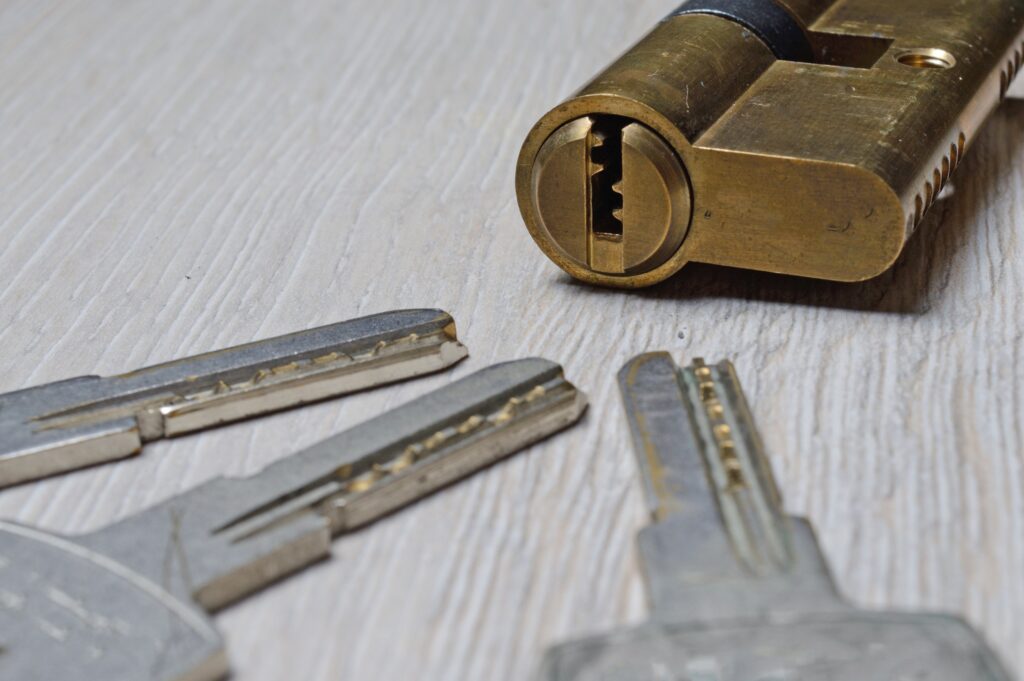
It takes a burglar less than a minute to snap a standard euro-cylinder lock.
No drilling.
No smashing glass.
No noise that might wake a sleeping household or alert a passing neighbour.
Just a pair of pliers or a basic wrench, applied to the right spot, and the door swings open.
Lock snapping has become one of the most common ways burglars break into homes across the UK, and Nottingham is no exception. At Grays Locksmiths, we’ve fitted countless replacement locks for homeowners who had no idea their front or back door was vulnerable until it was too late.
The frustrating part is that prevention is often straightforward and affordable once you know what to look for. This blog explains what lock snapping involves, why so many homes remain exposed to it, and what you can do to protect your property.
What is lock snapping?
Most uPVC and composite doors use euro-cylinder locks, where the cylinder sits inside the door handle and connects to the locking mechanism. These locks have a structural weak point where the two halves of the cylinder join.
Burglars exploit this weakness using basic, easily available tools. They grip the exposed part of the cylinder, often with pliers or a specialist snapping tool, and apply force until it breaks at the join. Once the cylinder has snapped, the locking mechanism can be operated directly, and the door opens.
The whole process can take under a minute. There’s minimal noise beforehand, and the damage to the door itself is often limited, which is part of why this method has become so popular with opportunist burglars. It doesn’t take specialist skill or expensive equipment, just knowledge of where to apply pressure.
This vulnerability became widely known among criminals after media coverage highlighted just how easy it was to defeat standard cylinders, and break-ins using this technique rose sharply as a result.
Why are some locks more vulnerable than others?
Not every cylinder is equally at risk. The main factor is how far the cylinder protrudes from the door handle. Anything sticking out by more than around 3mm gives a burglar something to grip onto, making the snapping attack far easier to carry out.
Older or budget cylinders are particularly exposed because they were never designed with snapping in mind. They lack the reinforced sections and sacrificial points that modern anti-snap cylinders include, which means once force is applied, they fail quickly and completely.
We regularly visit homes where the owner has no idea their lock is at risk. From the outside, a vulnerable cylinder can look identical to a secure one. It’s only when you measure the protrusion or check for specific certification that the difference becomes clear. This is exactly the kind of detail an insurance assessor or experienced locksmith will spot in seconds.
How to tell if your locks are at risk
A few simple checks can give you a good idea of whether your current locks need attention:
- Look at how far the cylinder sticks out beyond the door handle. More than 3mm is generally considered a risk.
- Check for a British Standard kitemark or a TS007 star rating on the cylinder itself, usually stamped on the visible end.
- Consider the age of your locks. If they predate the mid-2010s, they may well lack anti-snap protection.
- Think about whether your locks have ever been assessed, particularly if you’ve never had a security check since moving in.
If you’re unsure about any of this, we’re happy to take a look. A quick assessment from Grays Locksmiths will tell you exactly where you stand, with no pressure to act on it if you’d rather get a second opinion first.
Anti-snap locks and how they work
Anti-snap cylinders are designed to defeat this style of attack. Rather than failing in one piece when force is applied, they include a sacrificial section that’s designed to break away cleanly, leaving the rest of the locking mechanism intact and the door still secured.
This means that even if a burglar successfully snaps the cylinder, they’re left no further forward. The core security mechanism inside the door remains undamaged and locked.
The industry uses the TS007 kitemark scheme to rate security against this kind of attack. Cylinders and handles are each awarded a star rating, with a 3-star cylinder offering the highest level of protection on its own, or a combination of a 1-star cylinder paired with a 2-star handle achieving the same overall standard.
Anti-snap locks are now the recommended standard for uPVC and composite doors, and many insurers expect to see this level of protection as a condition of cover. Given how common lock snapping has become, fitting these locks is one of the most cost-effective security upgrades available to homeowners.
Other ways to strengthen your door against snapping attacks
A good cylinder makes a real difference, but it works best as part of a wider approach to door security.
Your choice of door handles matters, too. Secure handles designed to resist being forced or removed add another layer of protection, particularly when paired with a high-rated cylinder.
Multi-point locking systems, which engage several locking points around the frame rather than just one, make doors significantly harder to force open even if the main cylinder is compromised.
Reinforcing the door frame itself helps address a different vulnerability, since some break-ins succeed by splitting the frame rather than defeating the lock. Sash jammers and additional secondary locks give you extra peace of mind, particularly on patio doors or French doors where standard locks can be weaker.
Looking at the door as a complete system, rather than focusing on the lock alone, will give you far better protection overall. At Grays Locksmiths, this is exactly how we approach every security assessment.
What to do if you’re upgrading or moving into a new property
If you’ve recently moved home, checking your locks should be high on your to-do list. You have no way of knowing how many keys exist for your new front door or who’s holding them, so replacing the cylinder is a sensible precaution regardless of how secure it might look.
The good news is that replacing a vulnerable cylinder is usually quick and inexpensive compared to replacing an entire door. In most cases, our engineers can swap out a standard cylinder for an anti-snap version in well under an hour, with minimal disruption.
If you’re a landlord, it’s also worth remembering that providing adequately secure locks forms part of your responsibilities to tenants. An anti-snap upgrade is a small investment that protects both your tenants and your property.
How can Grays Locksmiths help?
As MLA-approved Master Locksmiths and an Assa Abloy service centre, we’ve fitted anti-snap locks across hundreds of homes in Nottingham and the surrounding area. We understand which cylinders are at risk and which upgrades will make the biggest difference to your security.
If you’d like to know whether your current locks are vulnerable, we’re happy to carry out a straightforward assessment and talk you through your options, with no obligation either way. Sometimes that’s a simple cylinder swap. Other times it might be worth looking at the door as a whole.
Give us a call on 0115 942 2315 to arrange a visit or ask any questions about lock snapping and how to protect your home.