
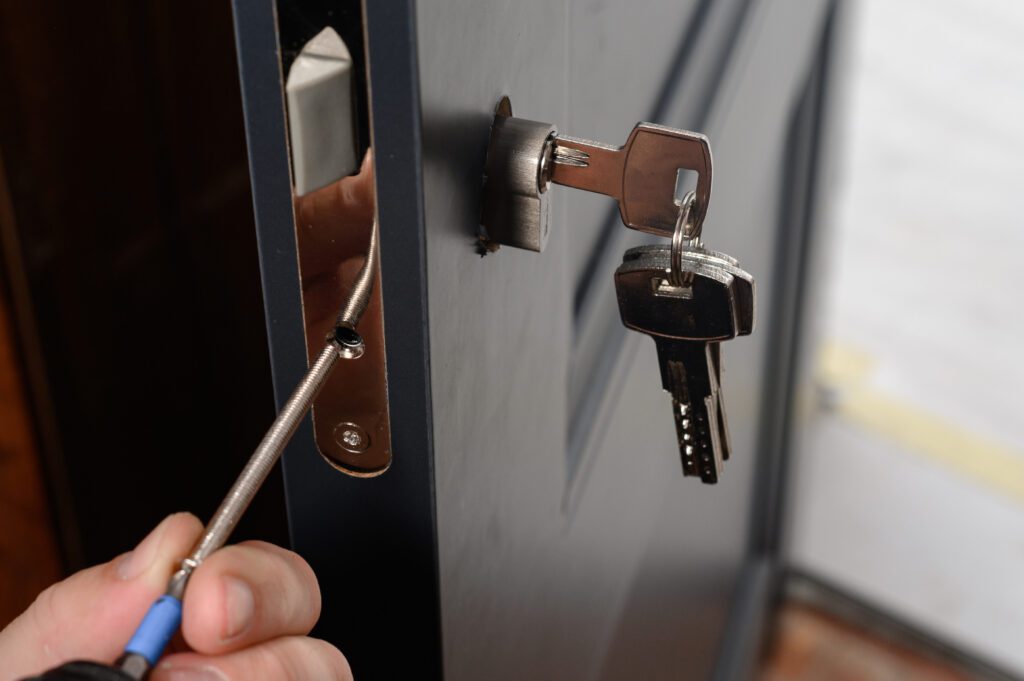
You’re stood at your front door, key in the lock, turning it just like always.
But this time, nothing happens. The door stays firmly shut, no matter how hard you push or pull.
It’s an unsettling moment, especially if you’re trying to get into your own home after a long day, or worse, trying to get out.
At Grays Locksmiths, this is one of the most common calls we get from homeowners across Nottingham. The good news is that this particular problem is rarely down to a faulty key. It’s almost always something happening inside the lock or with the door itself.
This blog walks you through the likely causes behind a key that turns but won’t open the door, along with what you should do (and not do) if it happens to you.
Why this happens
When your key turns smoothly, it tells you the cylinder is working as it should. The pins are lifting correctly and the key is doing its job. The problem lies further along the chain, in the connection between the cylinder and the bolt or latch that releases the door.
A key that won’t turn at all, or feels stiff and resistant from the start, usually points to an issue with the key or the pins inside the cylinder. A key that turns freely but achieves nothing is telling you something else is blocking or misaligning the mechanism further inside the lock.
Knowing this distinction matters because it changes what you should try next, and it can save you from assuming you need a whole new lock when the fix might be much simpler.
A misaligned door or frame
Doors move more than people realise. Wood expands and contracts with humidity and temperature, hinges loosen slightly over months and years of use, and the whole frame can shift as a property settles. None of this needs to be dramatic to cause problems.
When a door drops even slightly on its hinges, or a frame shifts out of true, the bolt no longer lines up properly with the strike plate in the frame. Your key still turns the cylinder perfectly well, but the bolt has nowhere to go.
We see this often in Nottingham’s older properties. Victorian terraces with original timber doors are particularly prone to swelling in damp weather, and you might notice the door feels tighter or stickier when closing it during autumn and winter months. Take a look at the gaps around your door frame, too. Uneven gaps, or a door that needs a firm shove to close fully, are both signs that alignment could be your culprit.
Worn or broken internal mechanism
Locks have moving parts that wear out eventually. Inside the lock body, there’s a mechanical link between the cylinder you turn with your key and the bolt that moves. Over years of daily use, this connection can wear down or, in some cases, snap completely.
Euro-cylinder locks, fitted to most uPVC doors, are worth mentioning here given how common they are across Nottingham homes. The internal cam that connects the cylinder to the multi-point locking mechanism can fail, leaving you with a key that spins the cylinder but achieves nothing at the business end.
This kind of failure rarely happens out of nowhere. Most homeowners notice the lock getting stiffer or requiring more effort over several weeks or months before it eventually gives up. If your lock has been feeling increasingly reluctant lately, this could well be the reason.
Debris, rust or lack of lubrication
Locks work hard, several times a day, every day of the year.
Without any maintenance, dust, dirt and old grease can build up inside the mechanism and gradually gum up the works. External doors also face exposure to the elements that can cause rust and corrosion, particularly in locks that aren’t weatherproofed.
This is one of the easier causes to prevent. A lock that’s serviced and lubricated periodically is far less likely to seize up than one that’s never had any attention since it was fitted.
However, use a proper lock lubricant rather than household products like WD40. While it might seem like a sensible quick fix, WD40 can attract more dust and grime over time, making the problem worse. A PTFE-based lubricant or graphite powder is a much safer bet for keeping your locks moving freely.
What to do
If you find yourself stuck right now, key turning but door staying put, there are a few things worth trying before you call anyone.
Apply gentle pressure to the door while turning the key. Push or pull the door towards or away from the frame as you turn, which can sometimes give the bolt the extra clearance it needs to clear a misaligned strike plate. Check whether the door is sitting square in its frame, and try lifting it slightly at the handle while turning the key, particularly if you suspect the hinges have dropped.
Take your time and pay attention to how it feels. If you notice any grinding, excessive resistance or the key starting to feel like it’s catching, stop straight away. Continuing to force it from this point risks turning a manageable problem into a much bigger one.
If gentle adjustments don’t work after a couple of attempts, it’s time to call in a locksmith rather than keep trying. Persisting alone rarely solves the underlying issue and can sometimes make things worse.
What not to do
We regularly get called out to fix problems that started as something simple and became complicated because of well-meaning DIY attempts. Forcing a turning key is one of the most common mistakes we see. Keep twisting against resistance and you risk snapping the key inside the cylinder, which turns a fixable lock problem into a much more awkward extraction job.
Heavy-handed use of WD40 or similar sprays is another frequent issue, often making the lock stickier over time rather than freeing it up. We’d also gently steer you away from attempting to drill out the lock yourself. Without the right tools and experience, this can damage the door, the frame, or both, and may end up costing considerably more to put right than the original problem.
When to call a professional locksmith
Most situations like this can be resolved without replacing the entire door or lock. A trained locksmith can usually diagnose the exact cause within minutes, whether that’s an alignment issue, a worn mechanism or something else. They’ll then use non-destructive methods to get you back into your property without unnecessary damage.
As MLA-approved Master Locksmiths, our engineers see this exact problem regularly across Nottingham homes and have the experience to identify the cause quickly and fix it properly the first time, rather than masking the symptoms.
So, if your key is turning but your door won’t budge, give us a call rather than struggling with it yourself. As an Assa Abloy service centre, we have both the training and the right tools to diagnose the problem and resolve it with minimal fuss.
Our emergency callouts are handled promptly across Nottingham and the surrounding area, and we always aim to use the least disruptive method possible to get you back into your home or business.
Call us on 0115 942 2315 and we’ll talk you through what to do next.